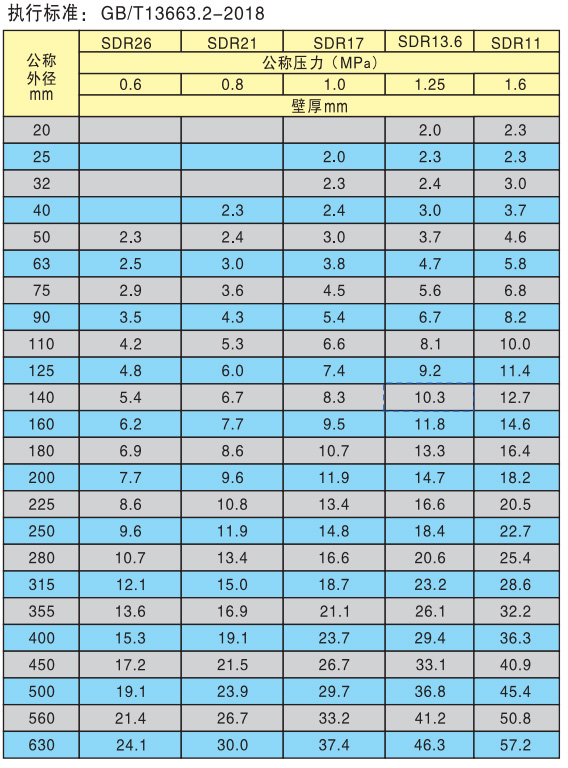
Polyethylene, abbreviated as PE, is a thermoplastic resin produced through the polymerization of ethylene monomers. During the polymerization process, ethylene monomers are affected by different polymerization conditions such as pressure and temperature, resulting in resins with varying densities. Therefore, polyethylene can be further classified into high-density polyethylene (HDPE) (with a density of 0.941-0.965g/cm3), medium-density polyethylene (MDPE) (with a density of 0.926-0.940g/cm3), and low-density polyethylene (LDPE) (with a density of 0.910-0.925g/cm3). Internationally, polyethylene resins are also classified into five grades based on the "Minimum Required Strength for Long-Term Hydrostatic Pressure (MRS)", namely PE32, PE40, PE63, PE80, and PE100. Among them, PE100 has become the main raw material for PE pipes due to its excellent comprehensive performance, including mechanical properties, cost-effectiveness, and other factors.
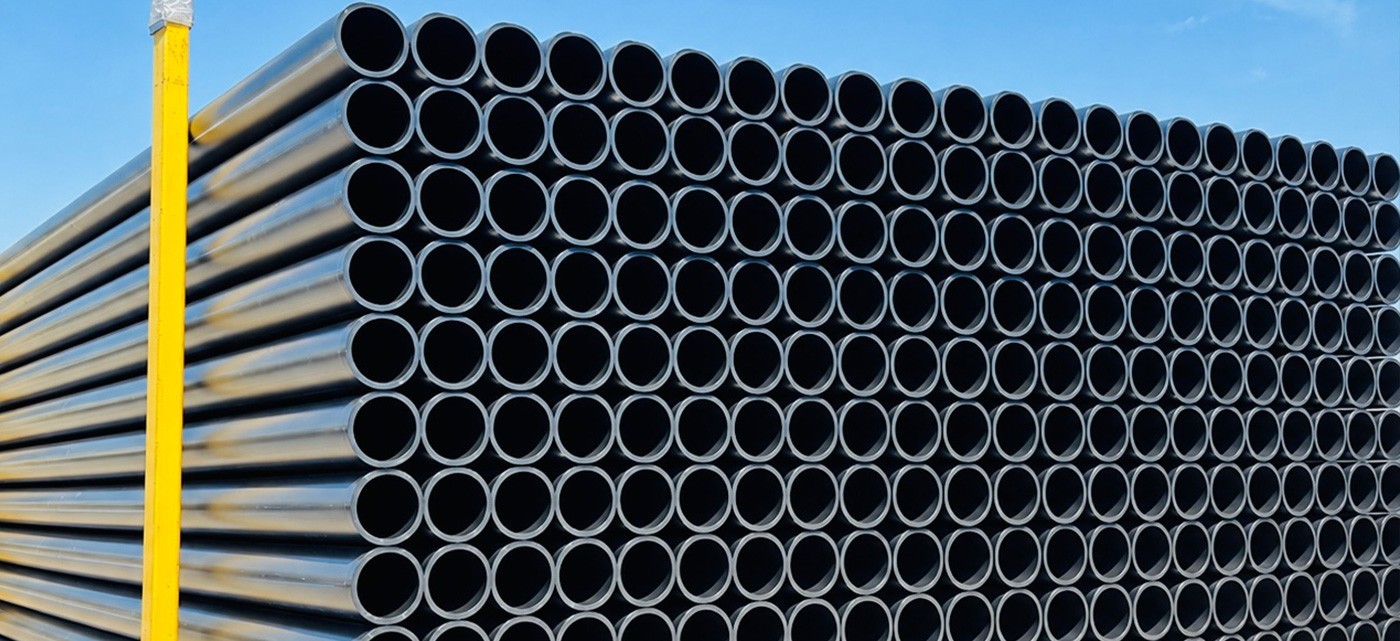
Characteristics of PE pipe products:
1. Corrosion resistance: The molecular structure of PE pipe is extremely stable, free from electrochemical corrosion, and resistant to the erosion of various chemical media, except for a few strong oxidizers.
2. Good wear resistance: Among various pipeline materials, the abrasion index of PE pipes is relatively low. When transporting ore slurry, its wear resistance is more than four times that of steel pipes.
3. Excellent flexibility and impact resistance: PE pipe is a highly flexible material, with an elongation at break exceeding 350%. It possesses excellent impact resistance and earthquake resistance, and exhibits strong adaptability to uneven settlement of the pipe foundation.
4. Long service life: PE pipes have high molecular weight, good stability, and anti-aging properties. Under normal operating temperature and pressure conditions, the service life of PE pipes can be guaranteed to be over 50 years.
5. Excellent hygienic and environmental performance: PE pipes are processed without the addition of heavy metal stabilizers, ensuring the material is non-toxic, free from scaling layers, and bacteria-resistant. They are a safe, hygienic, and eco-friendly piping material. The PE material itself is recyclable, posing no environmental pollution.
6. Safe and reliable construction connection method: PE pipes primarily utilize hot melting or electrofusion for connection, essentially ensuring the integration of the joint material, structure, and the pipe body itself, eliminating concerns of water or gas leakage.
7. Lightweight, easy to handle and construct: With a lightweight design, its specific gravity is only 1/8 of that of metal pipes. It is easy to handle, bend, and weld, with a simple and rapid welding process. The overall project cost is low, offering significant economic benefits.
Application of PE pipe products:
1. Urban and rural tap water pipes
2. Mine slurry conveying pipeline
3. Oil transportation pipeline
4. Well-drilling pipes
5. Power cable protective tube
6. Drainage pipe
7. Farmland irrigation pipe
8. Tubes for postal and telecommunications
9. Liquid conveying pipes for industrial materials in chemical, pharmaceutical, and paper-making industries
10. Piping for food factories such as beverage, milk, and alcohol production
11. Air conditioning and condensate water delivery pipe